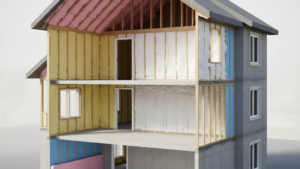
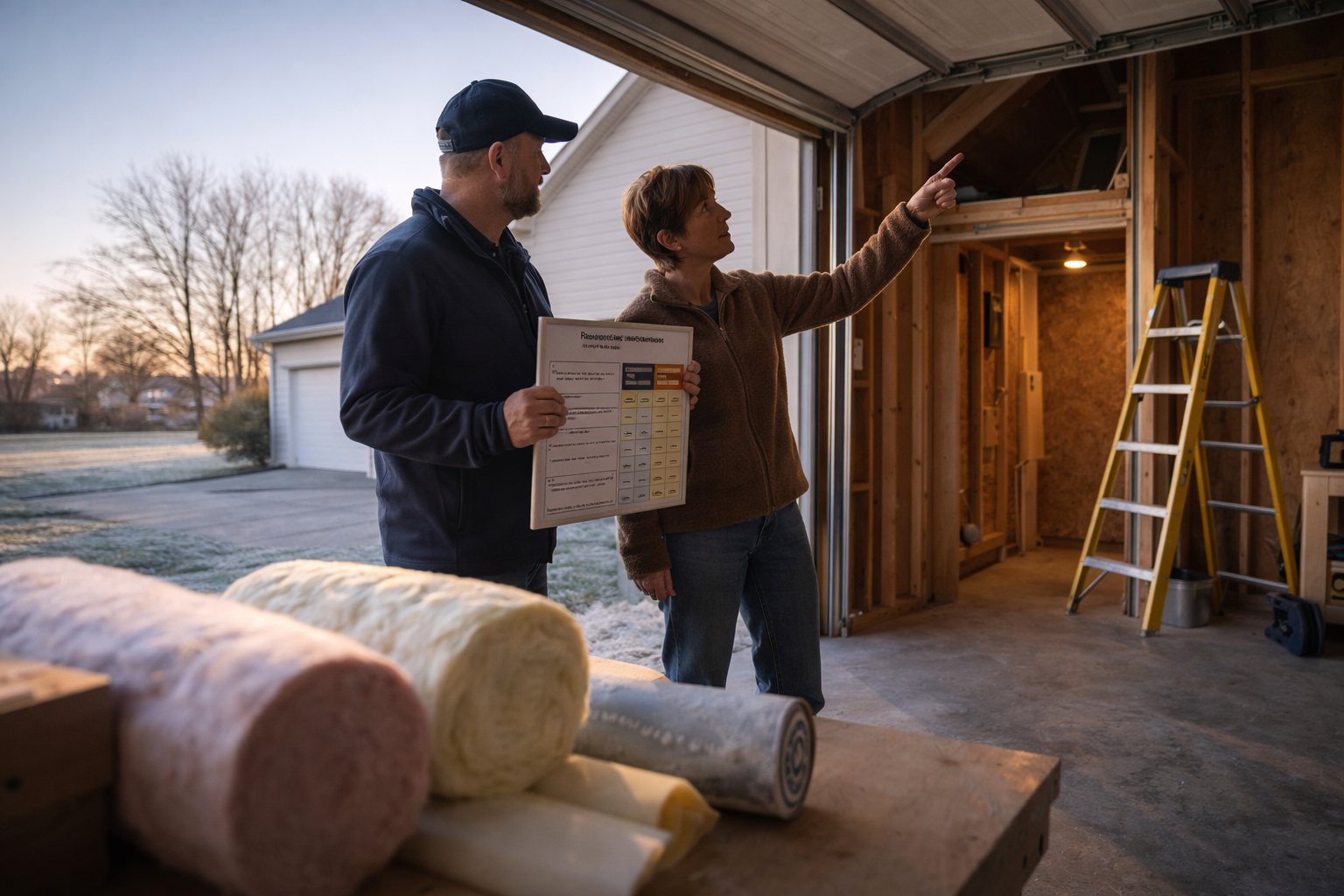
Indiana’s climate doesn’t go easy on homes. Between bitterly cold winters that push well below zero, hot and humid summers, and dramatic temperature swings in the shoulder seasons, your insulation has to perform year-round against some of the most demanding conditions in the Midwest. Choosing the best R-Value for Indiana homes means understanding how much insulating power each part of your home actually needs to stay comfortable, keep energy bills in check, and meet current building standards. Get the number too low and you’re paying to heat and cool air that escapes through your walls, attic, and floors. Go beyond what’s necessary and you’re spending money on diminishing returns.
This guide gives you the specific R-Value recommendations for every area of your Indiana home, explains what drives those numbers, and helps you make smart insulation decisions whether you’re building new, renovating, or upgrading an existing home.
What Is R-Value and Why Does It Matter?
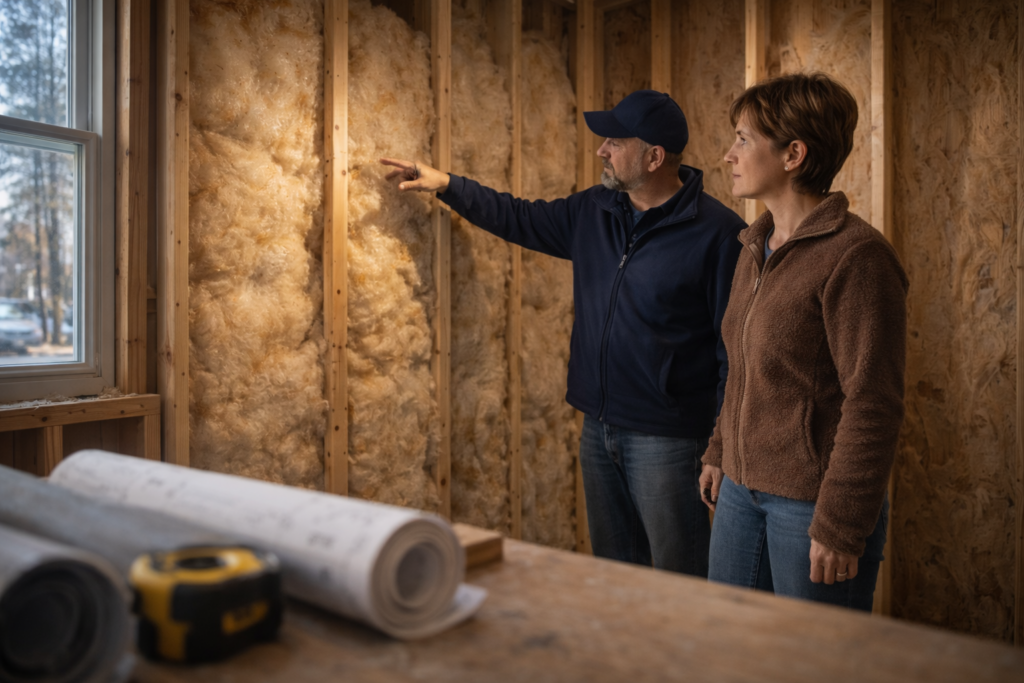
R-Value measures how well a material resists the flow of heat. The higher the R-Value, the greater the insulating power. When you see a recommendation like R-49 for an attic, that means the insulation in that space should provide a combined thermal resistance of 49.
R-Value is cumulative. If you already have R-19 in your attic and you add R-30 on top of it, your total is R-49. This matters for Indiana homeowners because many existing homes have some insulation already in place, and the goal is often to bring the total up to the recommended level rather than starting from scratch.
The recommendations for Indiana are based on climate zone data published by the U.S. Department of Energy and reflected in the International Energy Conservation Code (IECC), which Indiana’s building codes reference.
Indiana’s Climate Zone: Where You Fall on the Map
Indiana falls primarily within DOE Climate Zone 4A in the southern portion of the state and Climate Zone 5A across the central and northern regions. The dividing line runs roughly through the middle of the state, with Indianapolis and everything north classified as Zone 5A and the southernmost counties falling into Zone 4A.
This distinction matters because Zone 5A has slightly higher insulation recommendations than Zone 4A due to colder average winter temperatures and greater heating demand. If you’re not sure which zone your home falls in, checking your county against the DOE climate zone map or asking a local insulation contractor will clarify quickly.
For most Indiana homeowners, particularly those in the Indianapolis metro area and anywhere north, Zone 5A recommendations are the standard to follow.
Recommended R-Values for Indiana Homes by Area
Attic and Ceiling Insulation
Recommended R-Value: R-49 to R-60 (Zone 5A) or R-38 to R-60 (Zone 4A)
The attic is where your insulation investment delivers the greatest return. Heat rises, and in an under-insulated attic, that heat passes straight through the ceiling and out the roof during winter. In summer, radiant heat from the roof bakes down into your living space, forcing your air conditioning to work overtime.
For most Indiana homes, targeting R-49 in the attic is the practical sweet spot. This provides excellent thermal performance, meets code for new construction, and can typically be achieved with 14 to 16 inches of blown-in fiberglass or cellulose insulation. Going up to R-60 is worthwhile if you’re building new or if the incremental material cost is minimal during an existing attic insulation project.
Many older Indiana homes have attic insulation in the R-11 to R-19 range, which is dramatically below current recommendations. If your attic insulation is less than 10 to 12 inches deep, upgrading should be a top priority.
Exterior Wall Insulation
Recommended R-Value: R-20 or R-13 plus R-5 continuous insulation (Zone 5A) or R-20 or R-13 plus R-5 (Zone 4A)
Wall insulation is more complex than attic insulation because standard 2×4 wall cavities limit you to approximately R-13 to R-15 of cavity insulation, regardless of the material used. Achieving R-20 requires either 2×6 framing (which provides deeper cavities for thicker insulation) or adding continuous rigid foam insulation to the exterior sheathing.
For existing Indiana homes with 2×4 walls, filling the cavities with blown-in dense-pack cellulose or fiberglass to achieve R-13 to R-15, combined with R-5 rigid foam sheathing on the exterior during a siding replacement, is the most effective retrofit approach. If exterior insulation isn’t practical, filling empty or under-insulated wall cavities alone still provides a significant improvement.
For new construction, building with 2×6 exterior walls and R-20 cavity insulation, or using the R-13 cavity plus R-5 continuous insulation approach, are both code-compliant strategies that perform well in Indiana’s climate.
Floor Insulation (Over Unconditioned Spaces)
Recommended R-Value: R-30 (Zone 5A) or R-19 to R-25 (Zone 4A)
Floors above unconditioned crawl spaces, unheated garages, or cantilevered sections that extend beyond the foundation are a frequently overlooked source of energy loss and discomfort. If you’ve ever noticed that your first floor feels cold in winter despite the thermostat reading 70 degrees, insufficient floor insulation is a likely culprit.
Fiberglass batts are the most common floor insulation material, installed between the floor joists with the vapor retarder facing up toward the heated living space. For Indiana homes in Zone 5A, R-30 batts or a combination of batts and rigid foam should be the target. Proper installation is critical. Batts that sag, compress, or leave gaps between joists lose a significant percentage of their rated R-Value.
Basement Wall Insulation
Recommended R-Value: R-10 to R-15 continuous or R-13 cavity (Zone 5A) or R-10 to R-13 (Zone 4A)
Basement walls in Indiana are exposed to cold soil temperatures throughout winter, and uninsulated basement walls are one of the largest sources of heat loss in homes with below-grade space. Insulating basement walls is especially important if you use your basement as living space, a home office, or a workshop.
The most effective approach for existing basements is rigid foam board (XPS or polyiso) applied directly to the concrete walls, providing R-10 to R-15 depending on thickness. This can be left exposed in utility areas or framed over with drywall for finished spaces. Closed-cell spray foam applied directly to the concrete is another high-performance option that provides both insulation and air sealing in a single application.
For new construction, exterior foundation insulation installed before backfilling, combined with interior rigid foam or framed cavity insulation, provides the most comprehensive thermal envelope.
Rim Joist and Band Joist Insulation
Recommended R-Value: R-15 to R-20
The rim joist, where the floor framing sits on top of the foundation wall, is one of the most significant air leakage and heat loss points in any home. In Indiana winters, uninsulated rim joists can produce cold drafts along the perimeter of first-floor rooms and allow moisture to condense on the cold wood, leading to mold and rot.
Closed-cell spray foam is the preferred material for rim joist insulation because it provides high R-Value per inch, seals air leaks completely, and acts as a vapor retarder. A 2 to 3 inch application of closed-cell spray foam delivers approximately R-13 to R-20 and is one of the highest-return insulation investments for Indiana homeowners.
Alternatively, cut pieces of rigid foam board sealed at the edges with caulk or canned spray foam provide a cost-effective DIY option that significantly improves performance over an uninsulated rim joist.
Crawl Space Insulation
Recommended R-Value: R-10 to R-15 on walls (encapsulated) or R-25 to R-30 under the floor (vented)
Indiana’s moisture-heavy climate makes crawl space insulation strategy particularly important. For vented crawl spaces, insulation is installed under the first floor between the joists, targeting R-25 to R-30. For encapsulated crawl spaces, where the vents are sealed and a vapor barrier covers the ground, insulation is applied to the crawl space walls at R-10 to R-15.
Encapsulation is increasingly recognized as the superior approach for Indiana homes. It controls moisture more effectively, reduces the risk of frozen pipes, and creates a more stable thermal environment under the home. Many Indiana insulation contractors and energy auditors now recommend encapsulation over traditional vented crawl space designs for both new construction and retrofits.
Indiana Building Code and Insulation Requirements
Indiana’s residential building code aligns with the International Energy Conservation Code, though the specific edition adopted can vary as the state updates its code cycle. As of recent code cycles, the minimum insulation requirements for new residential construction in Indiana’s primary climate zones are consistent with the recommendations outlined above.
However, building code represents the minimum, not the optimum. Code-minimum insulation will keep your home legally compliant, but exceeding code, particularly in the attic, often delivers a strong return on investment through lower energy bills and improved comfort. Many energy-conscious builders and homeowners in Indiana choose to exceed code by one to two R-Value tiers, especially in the attic and basement, where the incremental cost is modest relative to the long-term savings.
If you’re renovating an existing home, be aware that insulation requirements may apply when walls are opened, roofing is replaced, or additions are constructed. Your local building department can clarify what triggers a code compliance requirement for your specific project.
Choosing the Right Insulation Material for Indiana
The R-Value target tells you how much insulation you need. The material you choose determines how you get there. Here’s how the most common options perform in Indiana’s climate.
Blown-in fiberglass is one of the most popular choices for attic insulation in Indiana. It’s affordable, non-combustible, and effective at filling irregular spaces. Approximately 14 to 16 inches of blown-in fiberglass achieves R-49.
Blown-in cellulose offers similar performance to fiberglass with slightly better air-sealing properties due to its higher density. It’s made from recycled paper and treated with fire retardants. It performs well in both attic and wall cavity applications.
Fiberglass batts are the standard for wall cavities and floor insulation. R-13 batts fit 2×4 walls, and R-19 or R-21 batts fit 2×6 walls. Proper installation without compression or gaps is essential for rated performance.
Rigid foam board (XPS, EPS, or polyisocyanurate) is used for continuous exterior insulation, basement walls, and rim joists. Polyiso offers the highest R-Value per inch at approximately R-6 to R-6.5, though its performance can decrease slightly in extreme cold. XPS provides a consistent R-5 per inch and handles moisture exposure well.
Closed-cell spray foam delivers approximately R-6.5 to R-7 per inch, provides air sealing and vapor retarding in a single application, and is ideal for rim joists, crawl space walls, and hard-to-access areas. It’s the most expensive option per square foot but often the most effective in targeted applications.
Open-cell spray foam provides approximately R-3.5 to R-3.7 per inch and is a more affordable spray option for attics and wall cavities where vapor permeability is acceptable or desired.
How to Prioritize Your Insulation Upgrades
If you’re working with a limited budget, the order in which you invest makes a significant difference in the return you see.
First priority: Attic. This is where the greatest heat loss occurs and where insulation upgrades are least expensive and most accessible. Bringing your attic up to R-49 should be step one.
Second priority: Air sealing. Before adding insulation to walls or floors, seal the major air leakage points in your attic floor, rim joists, and around penetrations. Air sealing amplifies the performance of whatever insulation is already in place.
Third priority: Basement and rim joists. Insulating basement walls and rim joists eliminates cold floors, reduces drafts, and addresses a common source of moisture problems.
Fourth priority: Walls. Wall insulation retrofits deliver meaningful comfort improvements but are more invasive and expensive. Time them with siding replacement or major renovation projects when possible.
Frequently Asked Questions
What R-Value do I need in my attic in Indiana?
For most of Indiana (Climate Zone 5A), the recommended attic R-Value is R-49 to R-60. Southern Indiana (Climate Zone 4A) calls for R-38 to R-60. Targeting R-49 provides excellent performance and meets current energy code standards for new construction.
How many inches of insulation do I need in my Indiana attic?
To reach R-49, you need approximately 14 to 16 inches of blown-in fiberglass or cellulose insulation. If you’re using fiberglass batts, roughly 15 to 16 inches of standard-density batts will achieve the same R-Value. Measure your existing insulation depth to determine how much you need to add.
What climate zone is Indianapolis in?
Indianapolis is in DOE Climate Zone 5A, which covers all of central and northern Indiana. This zone has higher insulation recommendations than Zone 4A due to colder average winter temperatures and greater annual heating demand.
Is spray foam insulation worth it in Indiana?
Spray foam is worth the investment in targeted applications such as rim joists, crawl space walls, and areas where air sealing is critical. For large open attic spaces, blown-in fiberglass or cellulose typically provides better value per R-Value dollar. The best approach for most Indiana homes combines spray foam in key air-sealing locations with blown-in insulation for broad coverage.
Does Indiana require insulation upgrades when remodeling?
Indiana’s building code may require insulation to be brought up to current standards when certain remodeling triggers occur, such as opening wall cavities, replacing roofing, or constructing additions. Requirements vary by project scope and local jurisdiction. Contact your local building department to confirm what applies to your specific project.
How do I know if my Indiana home is under-insulated?
Common signs include high heating and cooling bills relative to similar homes, rooms that are noticeably colder or hotter than others, ice dams forming on the roof in winter, drafts along exterior walls or near the floor, and visible insulation in the attic that is less than 10 to 12 inches deep. A professional energy audit with thermal imaging can identify exactly where insulation is lacking.
Insulate Smarter, Not Just More
The best insulation strategy for your Indiana home isn’t about cramming the highest R-Value into every cavity. It’s about putting the right amount of insulation in the right places, with proper air sealing and vapor management, to create a building envelope that performs efficiently through every season the Hoosier State throws at it.
Ready to find out where your home stands? Schedule an energy audit with a qualified Indiana insulation contractor or home performance professional. They can measure your current insulation levels, identify the highest-impact upgrade opportunities, and help you invest where it matters most. A warmer winter, a cooler summer, and lower energy bills start with knowing your numbers.